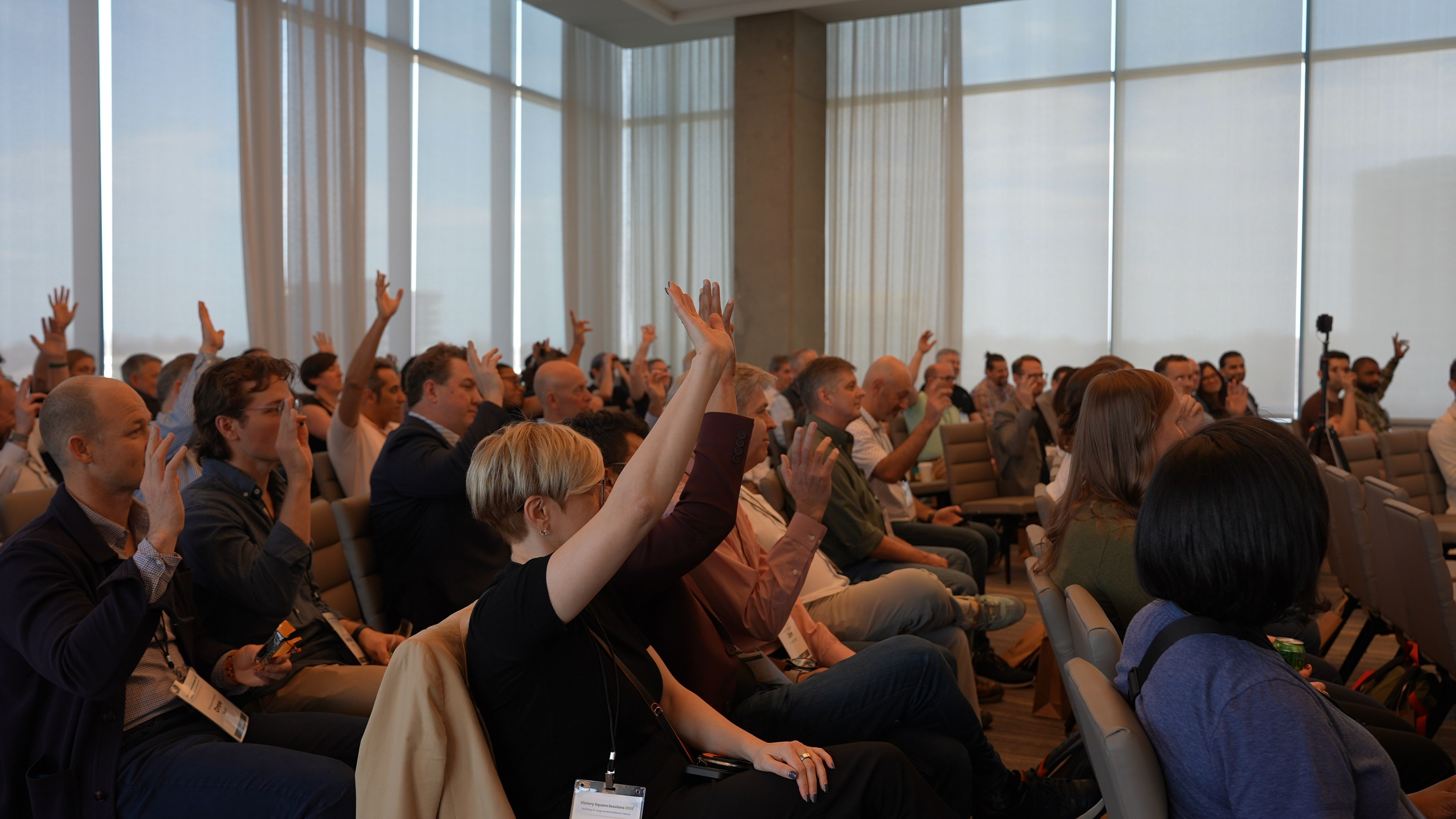
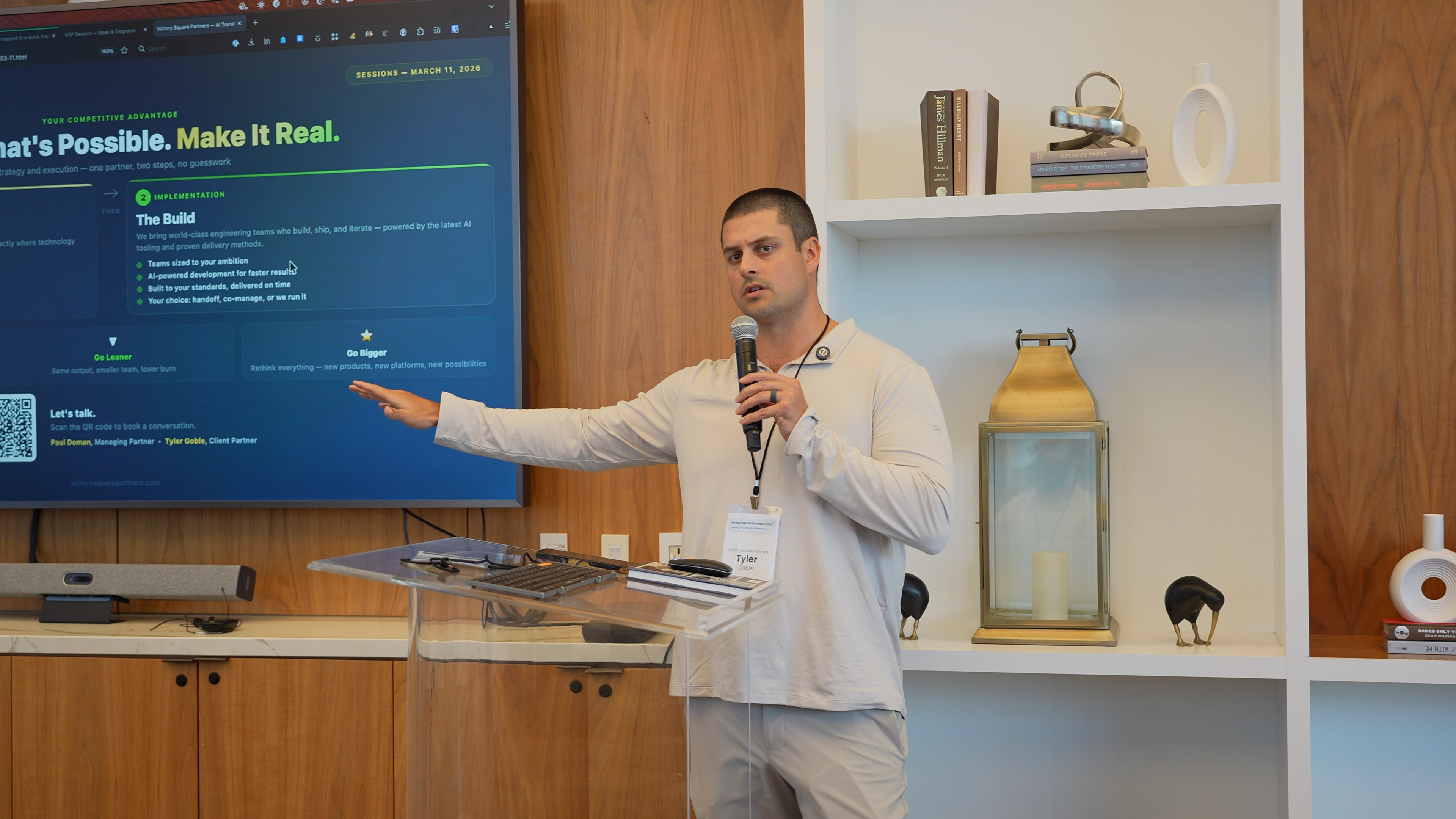
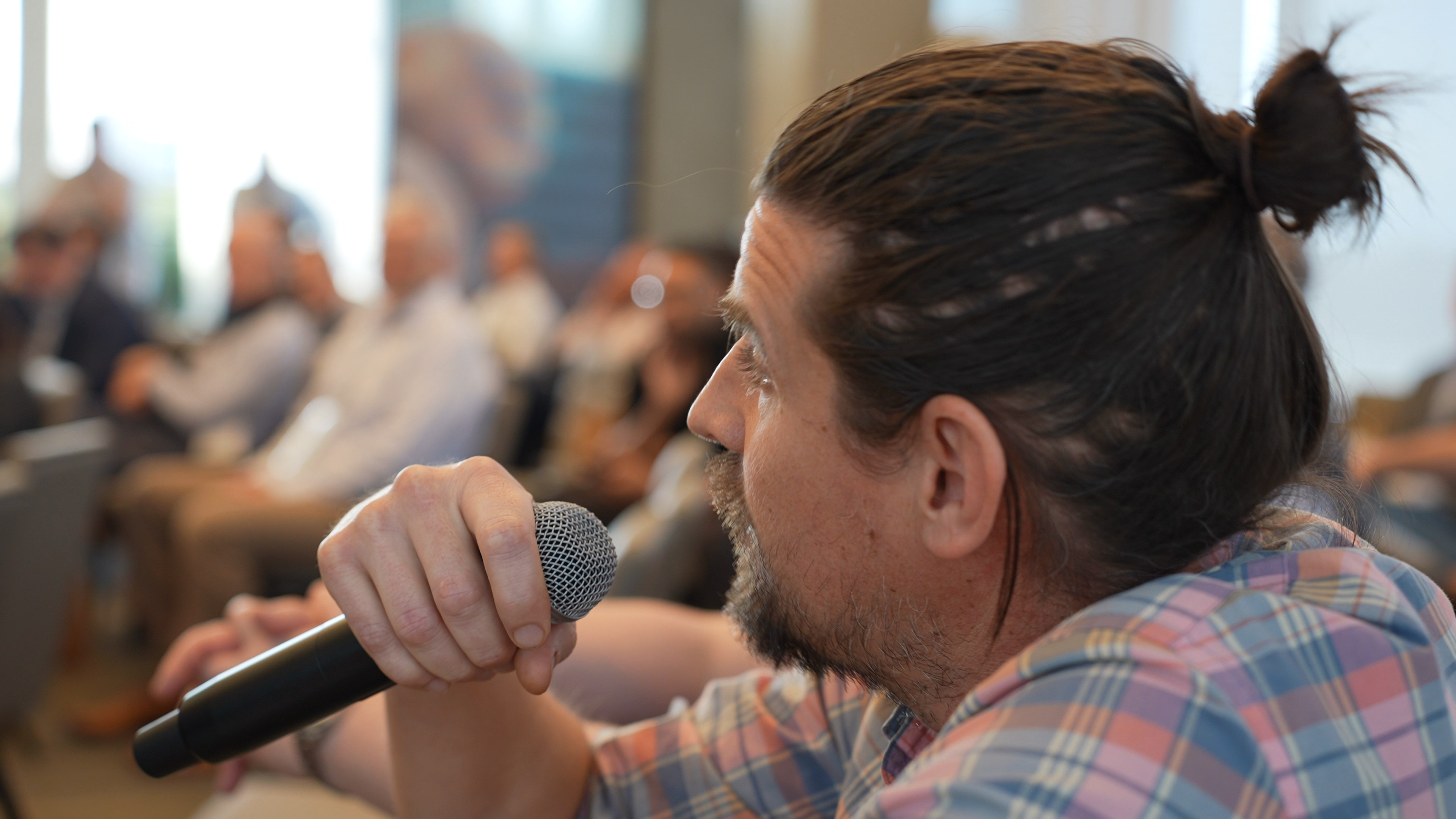
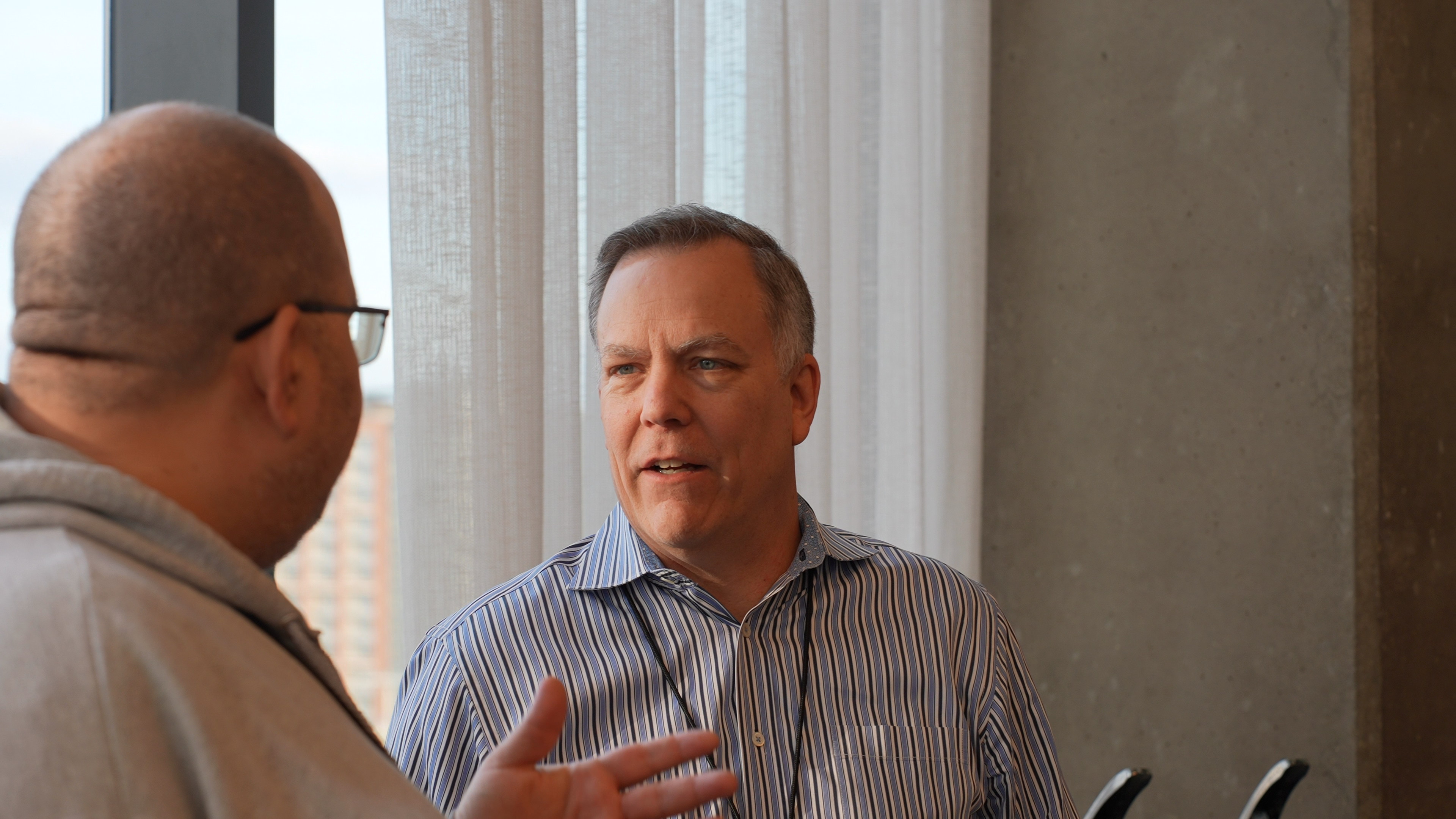
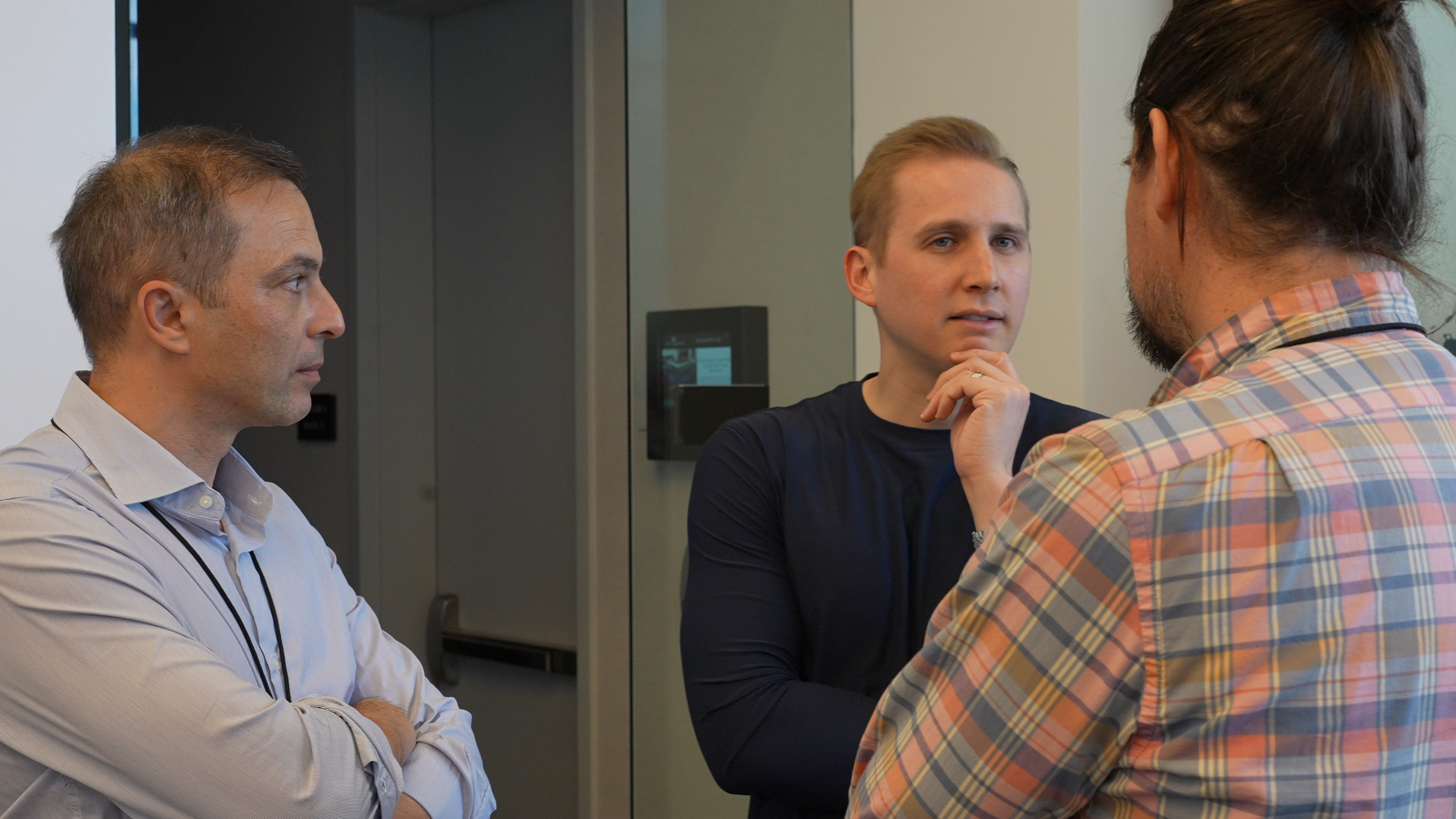
We built the event we’d actually want to attend: an ongoing series and community where local engineering leaders and CEOs can learn, connect, and have a good time without the facades. We start with a warmup activity, then learn from a real practitioner, followed by networking, drinks, and apps (the kind you can eat). We look forward to seeing you.
Every session brings a different activity, a different speaker, and a different topic, but the structure never changes because it works. It’s short enough to respect your evening and open enough to let the real conversations happen.
We talked to dozens of executives over the last six months, across CEOs, CTOs, CFOs and COOs at PE-backed portcos, regulated mid-market firms, federal contractors, and mission-driven nonprofits. The same sentence kept coming back:
Most organizations have AI on their roadmap and pilots already in flight, and most of those pilots have quietly stalled, not because the technology doesn’t work but because the stack underneath it, the process around it, and the contracts that support it were all built for a different decade. So we open every session with a fun activity where meeting the room isn’t optional; it’s how you play. By the time the speaker takes the floor, everyone’s already had a real moment together, and that’s entirely by design.
Each event in the series is built from this menu of topics, drawn directly from what executives are telling us, in their own words, on calls we run every week. We don’t fix the schedule in advance. We pick the topic that matches the room we can convene and the speaker who can do it justice.
The tech and process underneath the AI roadmap, and why most of it isn’t ready.
Every AI initiative that stalled in the last 18 months stalled for the same reason: the system underneath it was never built to move. Stored procedures, manual release gates, untrusted internal APIs.
If you ignored CI/CD a decade ago you survived. If you ignore AI infrastructure debt right now, you don’t. The investment is small. The compounding gap isn’t.
Feeding AI into a broken operating model doesn’t accelerate the business; it accelerates the dysfunction. Conflicting ground truth, accountability gaps, decision latency.
The decisions every executive is about to make, or has already made and is quietly regretting.
The gap between “AI on the roadmap” and “AI in front of customers” is where most companies are quietly stuck, and the board doesn’t know it yet.
In-house AI development sounds like control. It costs three teams, two years, and a talent market that doesn’t favor you. The founders who killed the experiment can explain why.
One technically-fluent leader carrying the whole AI transformation isn’t a strength; it’s a single point of failure. What happens when they’re saturated, recruited away, or out for two weeks?
Junior staff want Claude turned loose on everything. Senior leadership wants guardrails. The fight inside your firm is the same fight inside every firm, and most companies are losing both sides of it.
How you actually buy, sell, and contract AI delivery in a world where the old units of measure no longer apply.
The pricing models procurement knows how to evaluate were built for a world that doesn’t exist anymore. Headcount has no relationship to outcomes. T&M is breaking on both sides of the table.
If you sell delivery hours today, the AI-era version of your pricing model is a different model, not a discount on the old one. The founders who already made the transition can tell you what broke first.
There is more budget for AI delivery than at any point in the last decade, and almost nobody in the buying seat trusts the vendors in front of them. The buyer-side post-mortems are damning.
The cost when this goes wrong: for the company, for the board, for the audience your AI is delivering to.
Hallucinated citations in expert-witness reports. Fabricated case law in legal briefs. AI in regulated domains isn’t an efficiency tool; it’s a liability surface.
You can run the model. You can show the output. But can you explain it upward, to the board, the investors, the regulators? Most executives can’t.
You own the data. You have the customers. You should be defensible. So why is a competitor with a $9.99 LLM license eating your lunch?
Federal AI guidance. State-by-state compliance fragmentation. The regulatory clock is moving faster than the tooling roadmap, and “we’ll get to it” stopped being a viable answer two quarters ago.
How AI changes the shape of how work gets built and sold, for the firms doing the building and the executives buying from them.
The shift from artisan AI delivery to industrialized AI delivery. Why “we use Claude for everything” is not a strategy.
The new bottleneck in AI delivery isn’t engineers; it’s the people who can translate executive intent into agentic specifications. They don’t have a job title yet.
Your pricing model lives in a document. Your pricing realization happens wherever the relationship allows. Until a pricing authority exists separate from the account owner, outcomes pricing drifts back to hourly billing.
A $2B SaaS company watching purpose-built AI tools replace its product one workflow at a time. The pattern reshaping every SaaS market, not as a frontal assault, but as a flank.
The people on stage have actual receipts. They’ve hired the engineers, made the calls under pressure, and lived with the outcomes. No talking heads. No sponsored speakers. The keynote slot is programmed when the right person and the right topic align.

Helps PE and VC portfolio companies figure out where they actually stand on AI readiness and builds the bridge from there. Brings hands-on technical depth to architecture reviews, transformation roadmaps, and engineering team leadership at growth-stage companies.
LinkedIn
Army veteran, entrepreneur, and technology services executive. Co-founded Victory Square Partners in 2019 and has grown it to 200 team members and back-to-back Inc. 5000 rankings. Member of Mindshare (class of 2024).
LinkedIn
Started as a software engineer, rose to architect, served as CTO of Parature through its acquisition by Microsoft. Now leads advisory engagements helping growth-stage companies build AI roadmaps and ship faster without sacrificing judgment.
LinkedInWe’re intentional about who gets in, because the quality of the room is the whole point. If you lead a technical team, own an AI roadmap, or are actively building something, you’ll find your people here. The more honest you’re willing to be about what’s actually going on in your organization, the more you’ll get out of it.
CTOs, VPs of Engineering, heads of product, and senior architects at growth-stage and mid-market companies. People who own a technical team, an AI roadmap, or a delivery problem they haven’t solved yet. This is the core of the room.
Founders and co-founders who came up through engineering and are now navigating the AI build-vs-buy question with real money on the line. They bring a different kind of urgency to the conversation, and a different kind of honesty.
Fractional CTOs, technical advisors, and PE or VC partners who see the same AI implementation failures across dozens of companies. They come because the cross-pollination is the whole point, and because they need the peer network too.
You won’t get a drip sequence. You’ll hear from a real person, usually within 48 hours. Whether you want a seat at the next session, a conversation before it happens, or a slot on the stage to tell your own story, there’s a path below. Interested in co-hosting or bringing your community? Reach out the same way.
Get on the invite list for upcoming sessions. Tell us which topics you’d want to be in the room for and we’ll send the invite when the date is locked.
You have a specific situation worth a real conversation before you show up. Tell us what you’re working on and we’ll schedule a 30-minute call before the next session.
You’ve lived one of the topics on the menu and would consider telling the story from the stage. No deck required. Just what happened, what broke, and what you’d do differently.
Tell us which topics you’d want in the room and we’ll make sure the programming reflects it. You’ll hear from a real person within 48 hours.
You have a specific situation worth a real conversation before you show up. Tell us what you’re working on and we’ll schedule a 30-minute call.
No slide decks required. Just the truth about what happened and what you’d do differently. Pitch it here and we’ll set up a 30-minute prep call.