
Insight
VSP Practices: Community-driven Domains for Creating Experts
In 2023 we celebrated our fourth year of existence and a series of accomplishments that reinforced the drive with which we started. Growing from a handful of people to a company that employs 140+ engineers is reason for…
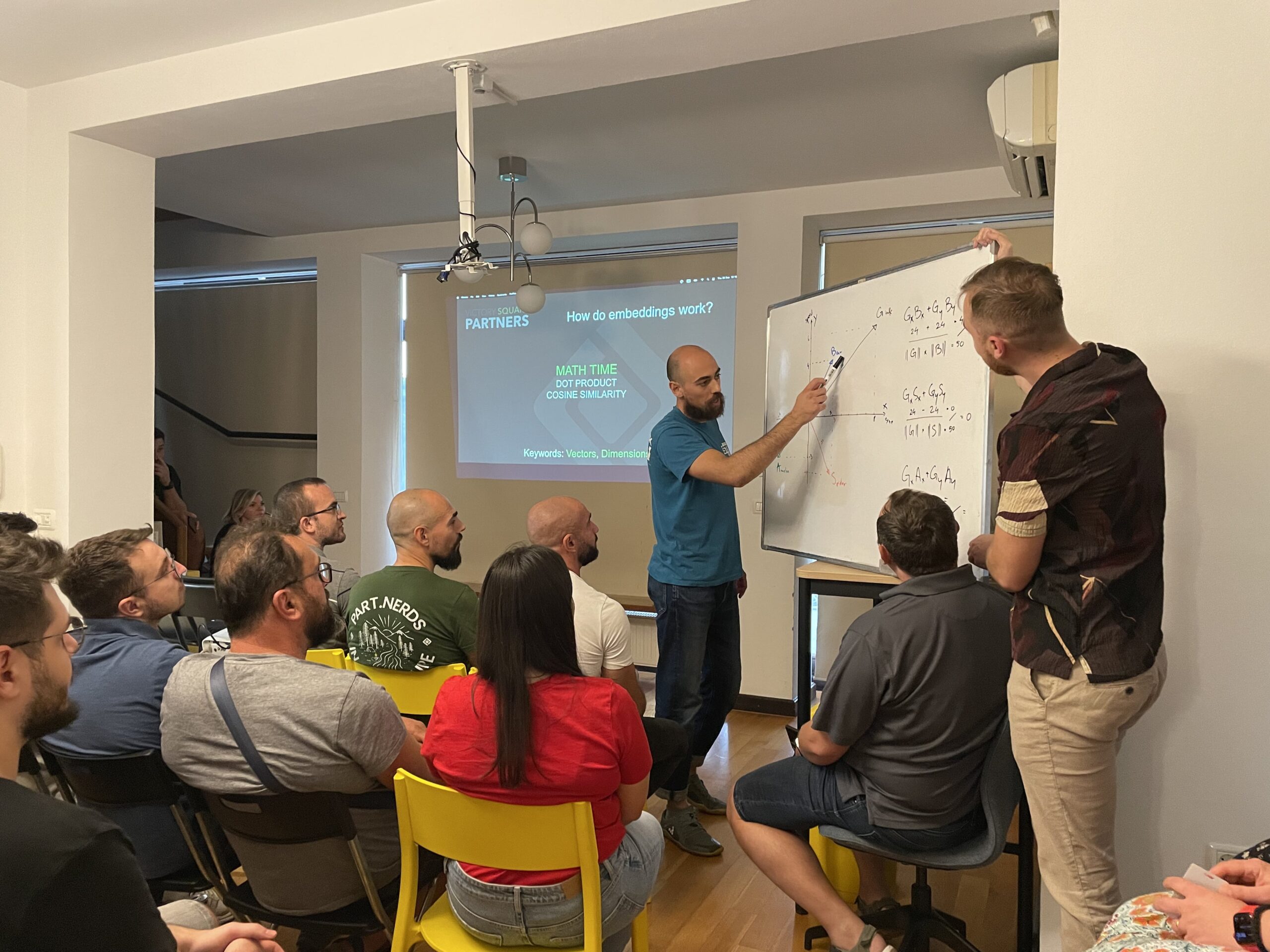
In 2023 we celebrated our fourth year of existence and a series of accomplishments that reinforced the drive with which we started. Growing from a handful of people to a company that employs 140+ engineers is reason for celebration, but also for deep-thought as to how we can successfully scale and maintain our quality of services and culture. What’s more, it’s also a proper occasion for expanding into new, emerging territories that can bring value to clients in need of software products.
This context was the catalyst that persuaded us to implement an idea we entertained from the beginning of Victory Square Partners: to create a series of practices around the core domains and services that our company offers, while also exploring up and coming technologies and services.
In this article, we will discuss the six Victory Square Practices we set into place, with their objectives and long-term benefits, both for our employees and our clients:
✦ DevOps Practice
✦ UX Practice
✦ QA Practice
✦ Leadership Practice
✦ Security Practice
✦ AI Practice
Whether you’re a client looking for a software development partner or an engineer looking for a new role inside a fast-growing services company, this article will help you better understand our culture and our way of approaching projects.
What are the objectives of the VSP Practices?
VSP Practices feed from our belief that we can always improve, even in the areas in which we already are experts. In fact, continuous learning is one of our core values, alongside building good, trusted relationships. To help advance our values, each of the six Practices creates communities for people in the same domain, and unites them in tribes by establishing a common language and culture.
The ultimate objective is to generate more experts and establish an open base of knowledge to which all our employees have access and benefit from, no matter the project they’re on. At a granular level, this translates into standardised processes and best practices that can be followed and reapplied to deliver consistent results across projects. At the same time, the practices create stronger cross-functional teams, expanding knowledge from one department to another and generating technical expertise overall.
In addition, some VSP practices also research current tools, trends, and cutting edge technologies in order to keep up with international industry standards, and be one step ahead in meeting clients needs.
To be able to achieve these results, we have generated two streams of practices:
-
A stream that flows from the areas in which we already have established services (UX Practice, DevOps Practice, QA Practice, Leadership Practice).
-
A stream with a strong research component that tackles emerging domains or domains that are core to the success of any business (AI Practice, Security Practice).
To better understand the goals of each practice, let’s take them one by one. This way, we’ll be able to elaborate more on the tools we use, as well as the short and long-term goals we aim to achieve.
UX Practice
Victory Square Partners’ main objective with the UX Practice is to implement a work process that can be replicated across projects, ensuring consistent quality results for clients, and proving useful to onboarding new UX experts.
More specifically, the UX Practice community actively works on developing a step-by-step best practice to:
✦ ensure solid, dependable outputs in the discovery phase;
✦ provide consistency in the ideation phase;
✦ establish a company-wide standard for defining design system and a design language;
✦ set up a process framework: documents, surveys, and other reusable assets.
At a larger level, the UX Practice community also explores the most effective methods of cross-collaboration with other departments and establishes a clear process to ease work flows and align all parties involved. It educates both engineering teams and clients on the foundational importance of design in development, opening projects to new opportunities.
On one hand, our UX Practice directly targets our front-end experts in order to equip them with the necessary knowledge about UX, from big concepts such design systems to specific tools such as Figma. On another hand, the practice also targets our QA engineers, to ensure that all the planned features, functionalities and roadmaps are tested.
Translated into specifics, the UX Practice is structured around a series of recurrent workshops in which we define documents, templates, and tools, creating a common language and ground for our experts. All these initiatives are meant to (1) guarantee a consistent process that, no matter the context, returns reliable results, and (2) support the professional development of our UX experts and help them become more efficient.
Ultimately, this practice’s mission is to strategically embed UX in our development approach, as a service that our clients can leverage. Thanks to this practice, all our UX experts have access to an entire power-house of knowledge and are supported by an internal community of specialists. This means that an UX Engineer working on a project will be able to pick the brains of our entire UX tribe, thus providing exponential value to our clients.
DevOps Practice
The DevOps Practice tackles two different sets of practitioners and the dynamic between them.